
Subterranean musical influences
What supplies our deepest music instincts?

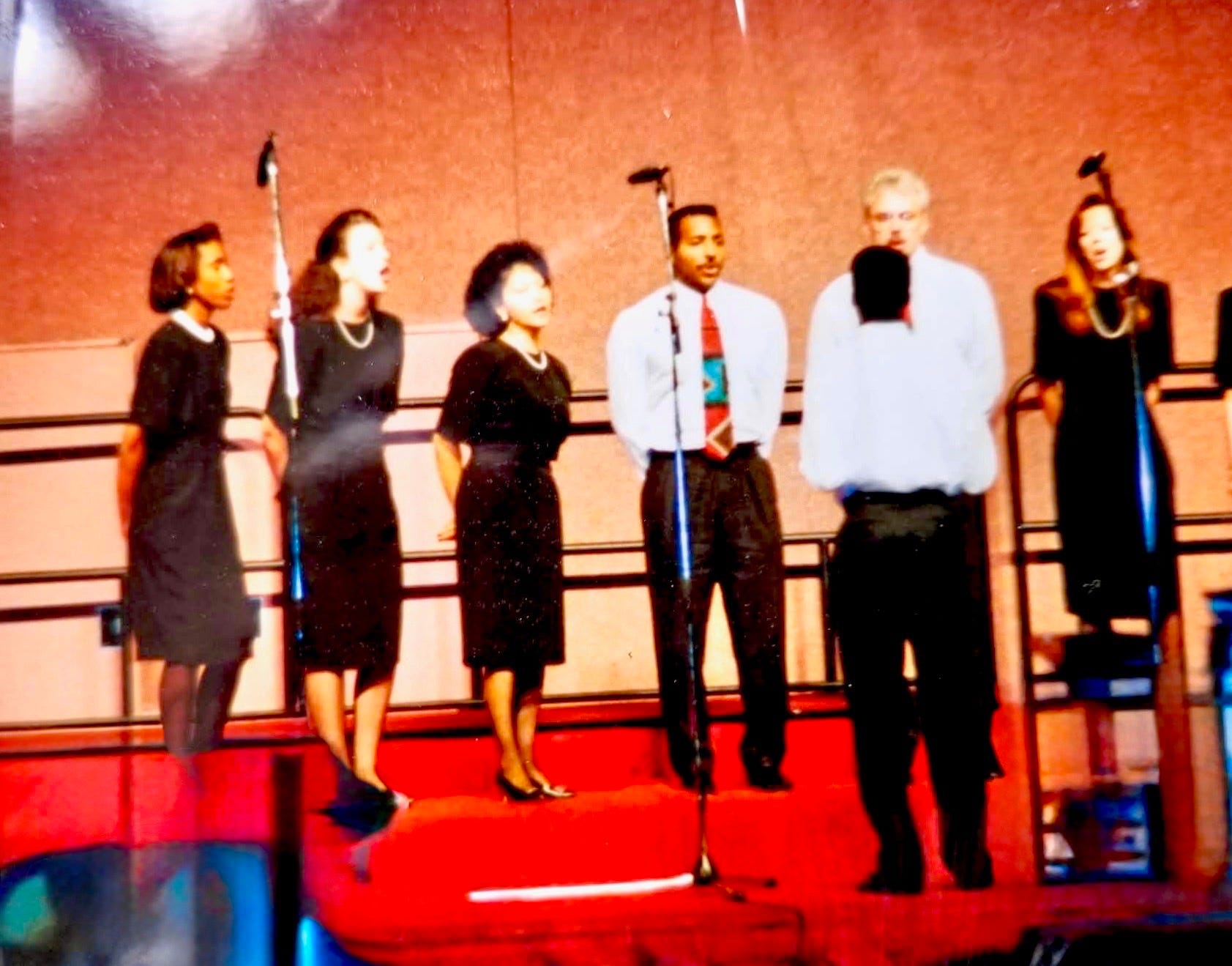
My earliest musical exposure was a full immersion in gospel music, sitting in front of a 10ish-piece choir made up of my parents and our family friends, none of whom were trained choristers but who sang with enough fire, joy, and clapping on 2 and 4 to make that lack of training immaterial.
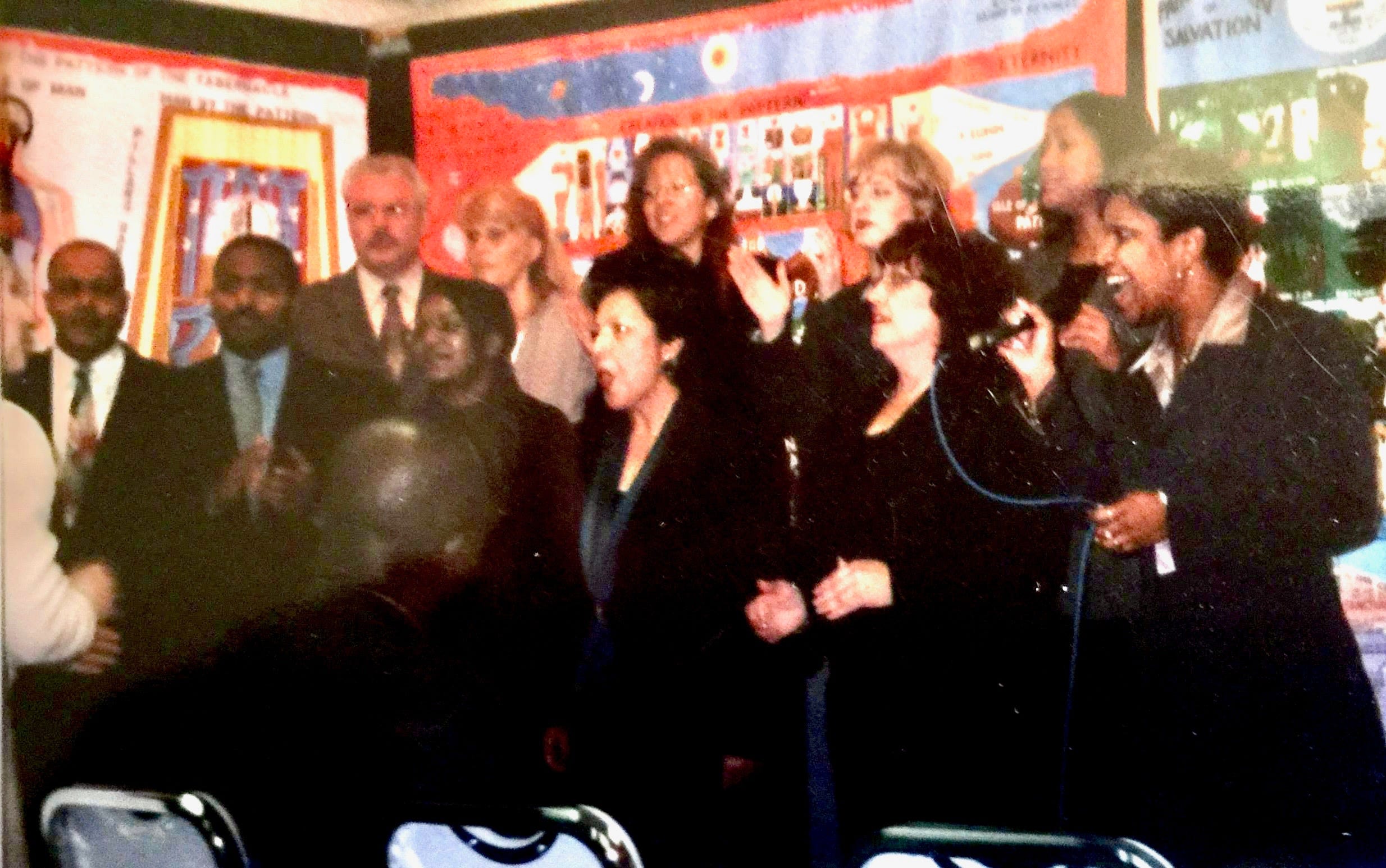
When I was old enough to stay somewhat still and mostly quiet for more than 10 minutes, my parents would bring me to the thrice-weekly sessions at the small bible class our family attended, hosted in a converted storefront in south Seattle.
Though I was bathed in their singing from before my earliest memories through to my undergraduate, I’ve struggled to find overt traces of this foundational musical experience in my own compositions. How is it that it hasn’t left its fingerprints all over my music-writing instincts? Or has it?
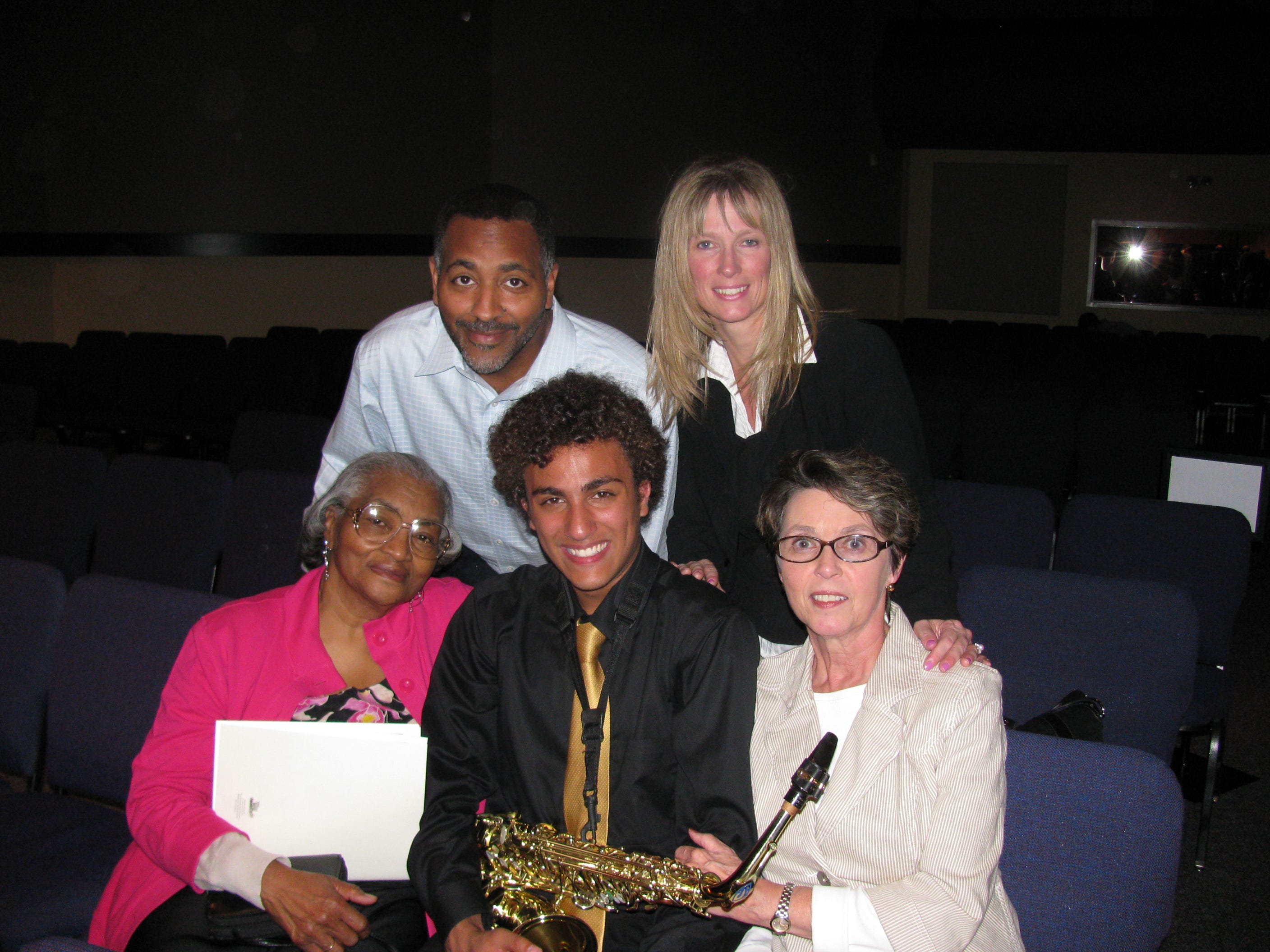
During this last decade of society-wide reflection on identity (and backlash against such reflection), I have thought a lot about my own identity as a child of a mixed-race marriage. I grew up in spaces black, white, and/or so mixed that such considerations were irrelevant—a lovely childhood, really.
Recently, (and in artistic and musical spaces in particular) there has been a demand for “elevating black and brown voices.” That demand seems to be for a specific idea of what black and brown contributions should look/sound like; the question of my musical influences never made me curious or troubled me until the zeitgeist was that a person who looked like me’s music should sound a certain way to be valued.
Silly or not, the last few years has set me on a journey to better account for my musical roots.
I’m a latecomer to writing music. I had my first premiere less than five years ago, after going to grad school in an unrelated field, after establishing a career as an urban planner, after buying a house. My path here was circuitous, beginning with a promising start as a successful high school saxophonist, getting scared of the struggles and potential deprivations of a career in music, doing something else for a decade, and realizing that music could, should, and needed to be a significant part of my life. My disjointed musical development separated me from that earliest musical thread, rooted in gospel music.
My self-directed approach to learning music has been highly cerebral: listening to, dissecting, and reconstructing the music I have come to love—the late-romantic to late-20th century canon of classical music. In contrast to the intuitive way our baker’s dozen choir felt for the right harmonies, melodic embellishments, number of repetitions, and ad libs (everything was learned by ear), the concert music I studied was bound by careful rules and forms. In search for gospel music influences in my own music—in an embarrassing and tautological effort to prove (at least to myself) I was “black enough”—I realized that while my approach to writing music relied on the models of classical music I had studied, the musical material and instincts—the individual’s sense of what the next right thing to do in the music is—that animated these models often relied on something much older and (previously) unexamined.
As I searched for these influences, I began to notice many moments that called back to something old for me—harmonies, vocal melodic shapes, oddly improvisatory sections. They weren’t in every piece I had written, and they were often brief sections, but they were almost always at deeply felt or pivotal moments in the music, somehow set off from what was around them.
There seem to be three tell-tales of this style as it shows up in my music. These sections are largely:
Homophonic, which more or less means everyone’s part is aligned and they are moving together as opposed to a more complex musical texture where each voice is doing something different.
Rhythmically irregular, in that there is a sense that the music is improvisatory or being made right there and then. This is probably an emulation of the choir director giving each entrance, judging the length of each silence and sound anew each performance.
Harmonically straightforward (with some exceptions), reflecting the simple harmony in thirds that choirs tend to sing in.
Move With Me: II. Coda
Right away you have the warm, choral benediction from the three lower saxophones, playing together in simple harmony but in a somewhat uneven rhythm. The call and response between a soloist and a chorus (in this case between the soprano and the alto, tenor, and baritone) is another landmark of gospel music.
Functionally, this is the end of this movement and a moment that consolidates all the distance traveled since its beginning; the warm benediction is a distant callback to an earlier section in the piece. I like to imagine the satisfaction of that recognition washing over the audience when three (visible) audience members tilt their heads all at the exact same moment right around 00:25 in the video.
You can find the lovely full performance by the University of Washington saxophone studio here.
A Sunward Tilt - transition to recapitulation
It should have been obvious where this one was coming from when I was writing it; I had a ton of trouble notating it in a way that would be intelligible to classically trained musicians, including myself, coming up with three different ways of writing the same thing (and the premiering ensemble asked for a fourth to further clarify!). It is supposed to feel slightly off-kilter, but at the same time have that sassy groove and hair-raising declamatory rightness that gospel music does so well. Listening to it now, I can clearly see in my minds eye the choir director up front, giving each entrance.


As for its function in the piece, it’s a moment completely out of left field, just before the final climactic recapitulation—a teaser, a giant upbeat to the recap, making the audience wait just a bit and wonder before diving in. In no other part of the piece do I write something similar.
You can find the full performance of A Sunward Tilt (one of my favorite pieces!) by Fivemind Reeds here.
as we atomize: III. echoes
This music is from the very end of a recently completed and yet-to-be-premiered saxophone quartet (so the MIDI video above will have to do). I spent hours fussing over the notation of this section, similarly to those few bars in A Sunward Tilt. I realize now that what I was trying to do was notate and replicate the capriciously deliberate control of a choir director giving each entrance. Almost but not quite realizing what I was trying to do, I left a note for performers about the “admittedly fussy” notation:
“If you like, once you understand the pacing and relationships established by the admittedly fussy notation, feel free to set strict adherence to notation aside in favor of something a bit more organic. Alto, tenor, and bari just have to agree with one another.”
The harmonic language starts out a bit crunchy, but the effect is that same perfect placement—that properly judged “just-so-ness”—especially when the harmony begins to warm up as the section progresses.
That careful control is essential to the musical function of this passage, which lays out a solid, if stilted, path to follow in the wake of the wild darkness of the 20 minutes of preceding music. The small swelling that finishes the work is a sorrowful look backward and hopeful look forward that will probably make me tear up when I hear it in performance, made all the more affecting because of the restraint just before.
No one else may recognize these moments as connected to gospel music. But for me, they take me right back; they make me smile; I close my eyes, nod, and I experience a deep sense of rightness coming over me.
Does this source of many of my musical moments make me/my music black enough? That’s a dumb, centuries-old question that won’t stop being asked just because I’m complaining about it.
More importantly/interestingly is to ask how does understanding one’s influences help you as an artist, or just as a human? Has anyone found that it ruins some of the magic of what we’re doing? Or does it helps you go even deeper into it?
Thank you for following me on this personal musicological journey! I hope you’re inspired to take a few moments to reflect on where you come from and what you’re made up of.
And in case you missed it (I did, so you probably did, too!) last November, the Montana State University Saxophone Studio made the pages of my piece Breathe, Set, Play glow with their organ-like sound. Led by Dr. Wonki Lee, Assistant Professor of Saxophone, the MSU saxophone studio really impressed me with their North American Saxophone Association appearance in spring 2025; I’m very fortunate to have the studio bringing my music to life.
This is brillant - tracing gospel choir influences through your compositional DNA really resonates. The way those homophonic moments show up at pivotal points makes so much sence, like musical memory surfacing when it matters most. I grew up around a small church choir and always felt certain harmonic progressions had this unspoken rightness to them. Your reflection on identity and influence is rly thoughtful.
Love it! Curious if you know Omar Thomas’s music and story! He’s a great speaker too. I think he’d resonate